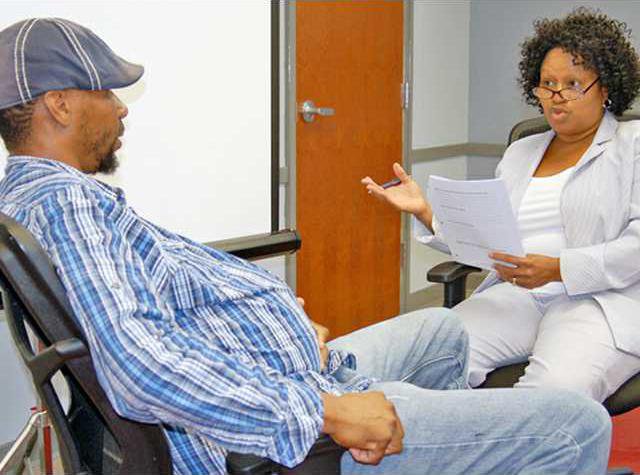
The door opens, and at last you’re face-to-face with the health professional — a doctor, nurse or physician’s assistant — you’ve been nervously waiting to see. You’re not feeling well, and you are worried about your health. You want answers. What you may not realize is that you’re not the only person in the room with problems.
The health professional is working to the best of his or her ability in a poorly designed and inefficiently incentivized system. That creates a host of problems often invisible to patients but that critically can affect the care.
From the outset of the encounter, effective communication often is compromised, if not completely lost. This happens not only in South Georgia but across the nation. Health literacy lies at the core of this communication challenge.
Health literacy is not only about reading skills or using simple words and sentences. Rather, health literacy empowers patients and health professionals to work together to find, understand, evaluate, communicate and use information to make informed decisions and, as a result, change behaviors to improve health and well-being.
No matter your age, education level, gender, income, race, ethnicity, health status or family background, you can improve your ability to seek and receive the best possible health care, and enjoy your best possible health, by using and improving your health literacy.
Do you remember the last time you complained about a medical visit? Maybe you were frustrated because you left without a full understanding of what your doctor said. Or you felt rushed and didn’t get to talk about anything other than the immediate problem. Or perhaps you were treated impersonally — as if you were an appointment and not a person.
There are three steps you can take to become an informed and active partner in your health care. These steps will help you create an effective team with health professionals and health facilities.
Step 1: Be prepared
Whenever you visit a health-care facility, always take a list of questions. Start with the following questions and add your own:
• What health problem(s) do I have?
• Why is that important to me?
• What should I do about that?
• Where do I go for any tests, medicine or appointments that I need next?
• How, how often, at what time(s) of day and in what amount should I take my medicine?
• How will I know if my medicine is working?
• What else I should know or do to stay healthy?
• When is my next appointment, and how should I prepare for that?
• Who do I call with my questions in the future?
Make sure that you know the answers to these questions before you leave your next health-care visit.
Step 2: Test your understanding before you leave
Don’t listen to that little voice inside your head telling you that you should act like you understand what the health professional is saying, even when you don’t.
Take the time to repeat to the doctor or nurse what you think the answers to your questions are. That way you can test your understanding before you leave. This process is called the teach-back technique, and it’s been proven to help improve understanding and help people do a better job taking care of themselves after they leave the clinic, doctor’s office or hospital.
Step 3: Develop your personal health team
The process of asking questions and getting answers will alert your health professionals that you are truly engaged in living a healthier life. Your goal should be to create the best possible partnership with your health professionals. Their job should not only be to take care of you when you are sick, but also to help you take better care of yourself throughout your life so that you don’t become sick.
You can be the best advocate for your own health if you simply give yourself permission to do so. Take charge of your own health, and you will find that health professionals are more than willing to help you. Reach out and actively work toward a healthier and happier life. The rewards last — and lengthen — a lifetime.
Pleasant is the senior director for Health Literacy and Research at Canyon Ranch Institute. He also is a member of the Institute of Medicine Roundtable on Health Literacy and of the U.S. Food and Drug Administration’s Risk Communication Advisory Committee. Andrew is the coauthor of the book, “Advancing Health Literacy: A framework for understanding and action.”
Help yourself with health literacy