The Army’s future of warfare is unfolding on Fort Stewart.
As the booms of tank cannons echo across the sprawling base, soldiers are testing out unmanned aircraft systems, or drones, for a variety of roles on the battlefield.
The Army is undertaking its “Transforming in Contact,” where it is looking at how future battles will be conducted. The current war in Ukraine has provided a number of lessons on how drones are being used, both as weapons and a means of surveillance.
“As part of the transformation in contact, the capabilities we field are helping to sense the enemy and strike the enemy before they can sense or strike us,” said Capt. William Langley, leader for the UAS element in the 6/8 Cavalry Squadron.
Soldiers are working with several kinds of drones, from those that can drop an explosive charge onto a target, to those that can relay battlefield information back to soldiers in real time, such as enemy locations and strength and to drones that can carry an explosive charge and be piloted into an opposing vehicle or formation.
“Using a drone helps to increase the survivability of the people we are supporting,” Capt. Langley said. “We can now send a drone instead of a human. With the strike capability, it is a lot more accurate than traditional methods of engagement.”
The 3rd Infantry Division has been designated as one of the Army’s Transforming in Contact, or TiC, 2.0 initiative units. That puts it at the leading edge of putting new technology, such as the drones, into use with front-line units.
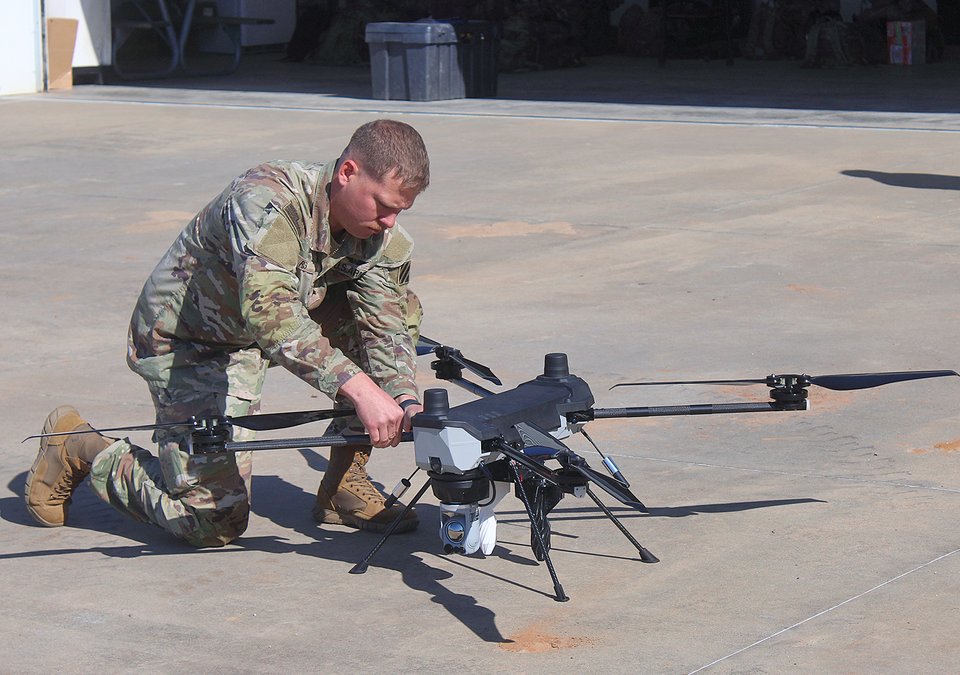
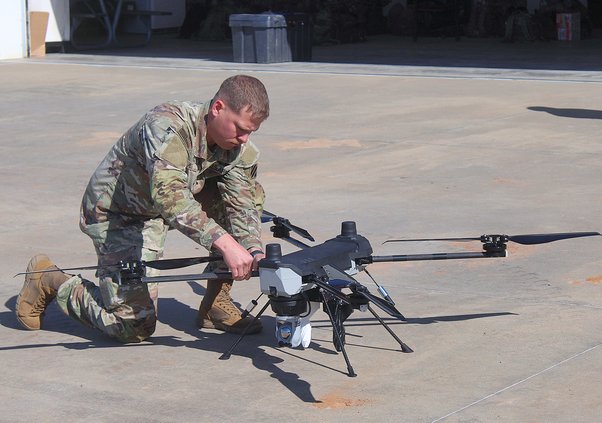
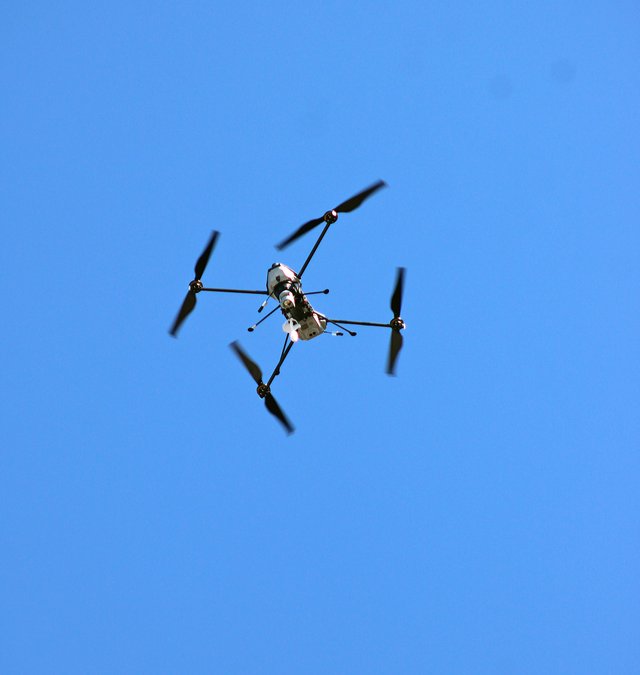
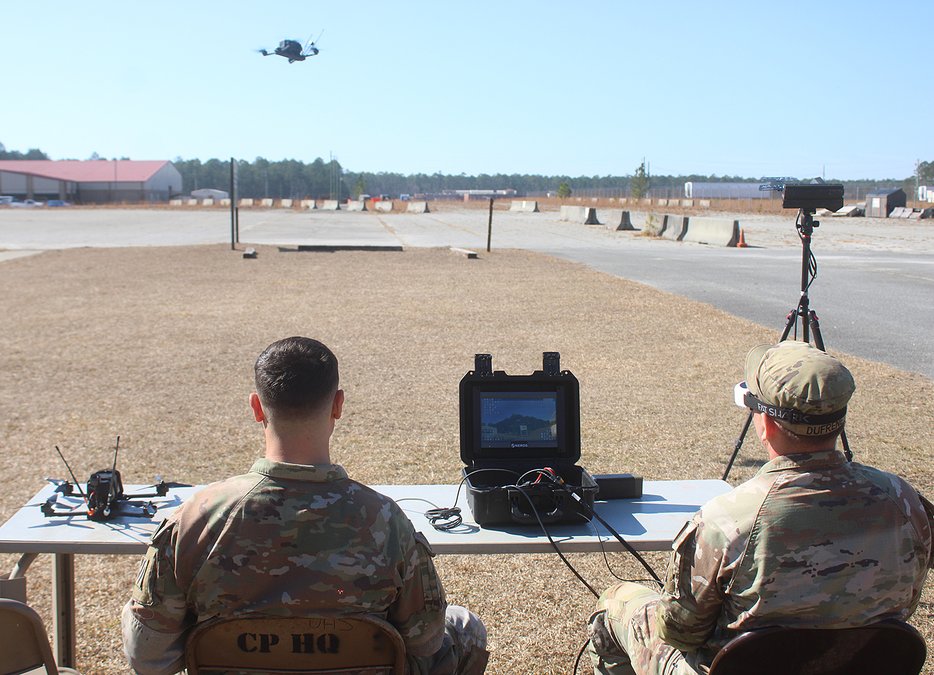
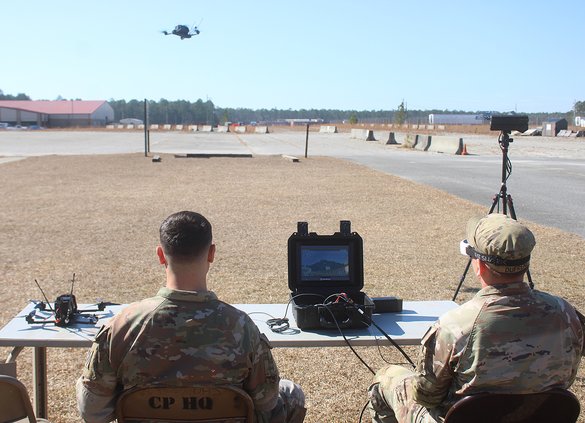
Soldiers from 6/8 Cavalry conducted UAS training with the C100 medium range reconnaissance drones during Spartan Focus 2026. Those drones carried training rounds built by a 3-D printer. Quadcopter drones have been used extensively as weapons in the Ukraine-Russia war, and the lessons taken from those battlefields are being studied and put into use on Fort Stewart.
“Of all the lessons learned we are basing our training off of is from the Ukraine conflict,” Capt. Langley said. “We are using that to guide our transformation.”
Soldiers demonstrated the C100, the Ghost X and the Archer drone systems Tuesday afternoon. The C100 and the Ghost X are medium-range drones. The C100 can be outfitted with munitions, and both it and the Ghost X have cameras that can work in day or night.
The Archer, a first person view quadcopter drone, can carry a variety of charges.
“The whole purpose of the equipment is to save the lives of American soldiers, to increase the survivability of our men and equipment,” Capt. Langley said. “The platoons I have been leading have been working with this technology for just about a year. In that time, we have fielded a variety of systems that give us increased capabilities.”
With the drones, the Army is getting input from the soldiers on the ground who are putting them into the sky. Sgt. Gustavo Andres Avila Garcia has been fielding and testing the equipment, which is innovating how the Army fights, he said.
“It’s enhancing our capability on the battlefield,” he said. “It’s helping us to be more lethal.
“We are at least three times as lethal as we were before,” he added. “And it’s getting better day by day. Our capabilities are incredible now. We can spot anything from miles away. We can hit it from miles away. It’s incredible stuff, really. It’s completely changed the way we fight.”
Having the Army ask for and rely on the input from soldiers on the ground has an impact on those working on the systems.
“I think it’s incredible I’m able to have such an influence on the future of the Army,” Sgt. Garcia said.
Sgt. Garcia, who joined the Army four-and-ahalf years ago, is an 11B by trade, meaning he’s an infantryman. Along with pulling the trigger on his weapon, he’s also steering drones.
“As soon as the Ukraine conflict kicked off, the first thing in my mind was ‘how is the Army going to be combat this and get up to speed,?’” he said. “I was very excited to see the future coming for that. When I saw an opportunity to be a part of that innovation, I took it.”
Along with using 3-D printers to make the practice munitions — which can be outfitted with explosives or shrapnel to become much more lethal — the soldiers are using the printers to make parts that otherwise might take weeks to arrive.
“The 3-D printing capability gives us flexibility with fixing and repairing equipment and to create new and innovative ideas to try out on the equipment,” Capt. Langley said. “Traditionally, if we wanted a prototype, we would have to reach out to a manufacturer. Instead, we can have software and have our soldiers create their own prototype and they can print them out in a day.”
For years, 3rd ID soldiers have been the tip of the spear. Now, they’re on the cutting edge of future Army tactics.
“We are definitely on the leading edge of innovation in our armored brigades,” Capt. Langley said. “We have a lot firsts in innovations in armored brigades when it comes to the introduction and implementation of drones.”