By Lucille Lannigan, Regional Growth and Development Reporter
RICHMOND HILL – A controversial proposed nickel refinery has thrown coastal Georgia into confusion and fierce opposition.
Westwin Elements, founded in 2022, is seeking to purchase the former Caesarstone manufacturing facility at 1 Caesarstone Drive. While company officials say they want community support, they have also stated that such approval is not required. Since becoming publicly known in Bryan County, the company has faced mounting skepticism over its claims, experience and transparency.
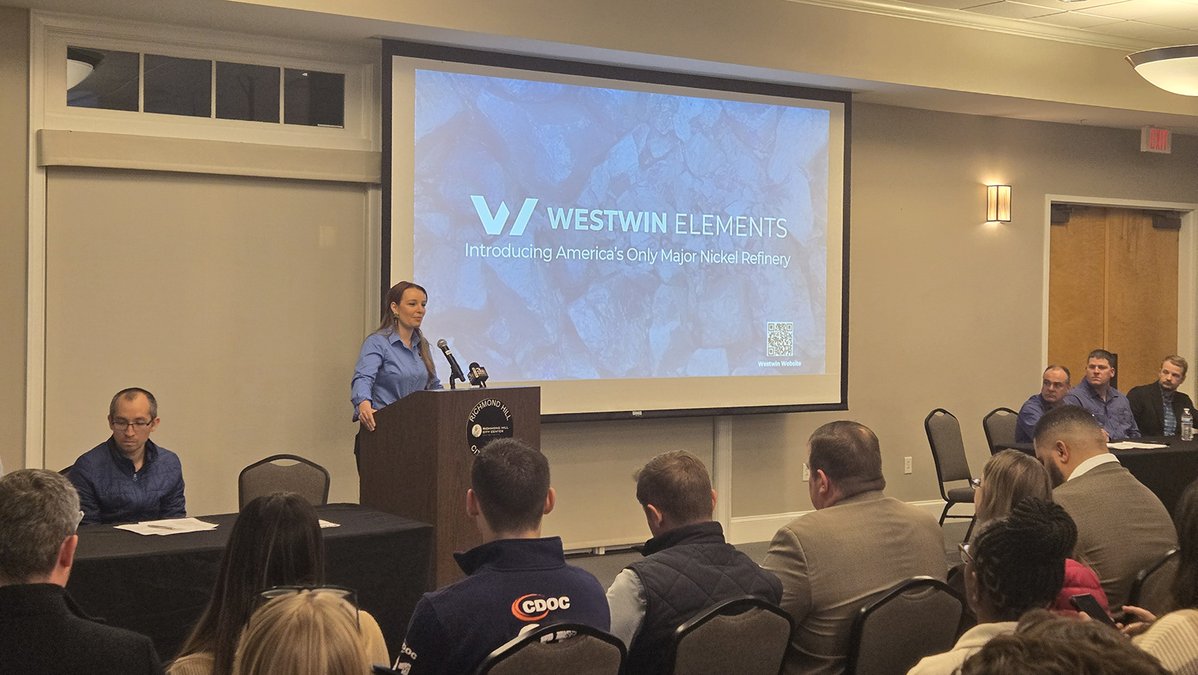
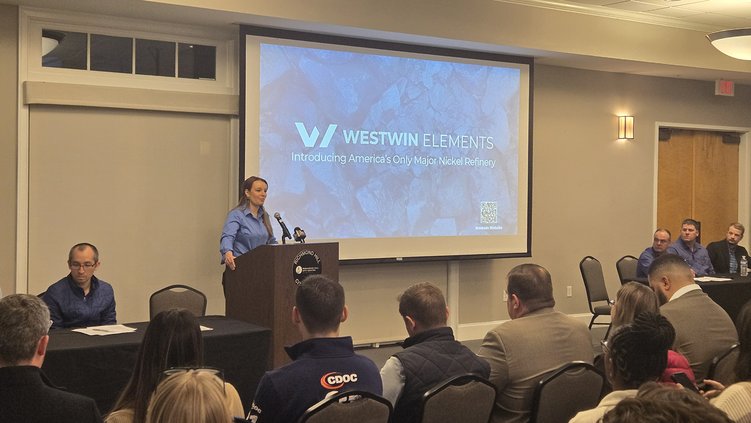
Westwin CEO KaLeigh Long said patriotism fuels the company’s mission, citing a desire for U.S. self-reliance in critical minerals such as nickel.
“We had hoped that Georgia, specifically Bryan County, would be culturally aligned with our mission,” Long said.
Relations between Westwin and Bryan County officials already have grown rocky. The company sent a cease-and-desist letter to Chairman Carter Infinger over alleged defamatory statements, but the county rejected the letter, calling its demands frivolous.
Less than 24 hours after Westwin’s public town hall Tuesday, county commissioners voted to investigate whether the Caesarstone property constitutes a public nuisance. The move followed comments from Long citing potential hazardous contamination at the site as justification for Westwin purchasing the property.
Both Bryan County and the City of Richmond Hill will investigate the site. If the property is deemed a public nuisance, County Attorney Aaron Kapler said the county would file a lawsuit and block any sale until remediation is completed.
For opponents, the uncertainty mirrors a familiar pattern. Kaysa Whitley, coalition coordinator for Westwin Resistance, said she saw similar issues when the company attempted to build a nickel refinery in Lawton, Oklahoma — a project abandoned after nearly three years of opposition.
“My advice is to question everything,” Whitley said. “The inexperience, lawsuits and environmental concerns — ask how your leaders plan to protect citizens.”
Coastal Georgians want brakes on new development Across coastal Georgia, people have voiced opposition.
Some are comparing the situation to when Hyundai Motor Group’s Metaplant America came to the area.
Kristen Stampfer, a Bulloch County resident and founder of Coastal Communities United, said residents had little meaningful input before Hyundai’s project was approved.
“Packed rooms voiced concerns, and Hyundai basically said it was already decided,” Stampfer said.
She said the project displaced wildlife and wetlands, shaping skepticism toward Westwin. Water contamination, she said, is the central concern, particularly given already strained aquifers.
“We moved here because we loved the natural beauty,” she said. “All we’re asking is to slow down, look at the impacts, and actually listen to the people who live here.”
Liberty County District 4 Commissioner Timothy Blount echoed those concerns, saying residents in his district — which borders Bryan County — have overwhelmingly opposed the refinery.
“I don’t like this next to our salt marshes, freshwater marshes and marine life,” Blount said. “If hazardous waste washed into these ecosystems, it would be catastrophic.”
While acknowledging Bryan County’s growth, he said some businesses should be rejected outright.
“I don’t care what type of jobs they bring,” Blount said. “They don’t need this refinery.”
Still, Westwin has won over the hearts of some residents.
Paula Compton attended the Richmond Hill town hall to support her son, Taylo Compton, the chief project engineer at Westwin Elements. Taylo Compton grew up in Richmond Hill. He was joined at the town hall by two other Westwin employees with Georgia ties.
Paula Compton spoke confidently about Westwin’s carbonyl process and her trust in the company. She said she hopes residents give the company a chance.
“I’m hoping they look at the science and the people behind the plant,” Compton said. “They’re not Hyundai.”
Compton teaches parttime at the new Richmond Hill High School, just a few minutes from Westwin’s desired nickel refinery site.
“Would my son put his mother’s health at risk?” she said.
Misleading claims and lack of transparency CVMR President and CEO Michael Hargett attended the town hall, citing concerns over potential intellectual property infringement. CVMR and Westwin are engaged in dueling lawsuits over contract and payment disputes.
Westwin has corrected statements made at the town hall, after Long initially said CVMR’s counterclaims had been dismissed.
“One of their counterclaims was dismissed; however, not every counterclaim has been dismissed,” Long clarified in a statement Tuesday night.
Hargett said if CVMR prevails in its lawsuit against Westwin, the company might have to enter a licensing agreement, depending on Westwin’s use of CVMR’s technology.
Hargett said CVMR stopped working with Westwin over unfulfilled promises. Hargett said former CVMR employees now working for Westwin may have carried proprietary knowledge with them, and he said CVMR has evidence that some of its technology has been integrated into Westwin’s system.
He called Westwin a “new company” with “extremely limited experience.”
“They’ve got some bright people, high energy, and they’re learning in one of the most hazardous, trickiest areas of all, chemical processing,” Hargett said. “I wouldn’t have any confidence in a company that had that nouveau experience. The experience, the understanding of the engineering measurements involved, all are critical. You have to have knowledge of these systems to be safe.
On environmental safety, Hargett disputed Westwin’s claims that its process generates no waste, saying hazardous solid residues and contaminated wastewater would still be produced and hauled off-site.
“Your coastal environment is especially sensitive,” he said.
Hargett also said Long’s referring to CVMR’s Canadian refinery with regards to public safety was misleading.
Hargett said when his Canadian refinery was first built, the land was open prairie. He said within the refinery’s 40 years, the surrounding town has nearly quadrupled in population and both a commercial and residential area have sprung up around the refinery. The refinery’s air pollution control equipment is tested each month, and he confirmed Long’s statement that the refinery has never had a problem.
Still, he said his company wouldn’t choose to build a refinery near vulnerable populations, and the Caesarstone location isn’t fit to build a new nickel refinery.
The Caesarstone facility in the Belfast Commerce Industrial Park where Westwin wants its facility is 2 1/2 miles from Richmond Hill High School and 1.8 miles from the nearest residential home.
“Being near … students, families … if you were to have a leak and you had wind by the time … any sirens or alarms might go off, they could be exposed,” Hargett said. “It would be a horrible moment.”
While acknowledging the value of industrial jobs, Hargett said communities must weigh economic benefits against environmental risk and long-term liability.
“That’s a heavy weight to put on a community,” he said.
Opposition to Westwin also reflects broader concerns about industrial development practices.
Whitley, with Westwin resistance, said early discussions with city and county development authority officials in Lawton lacked clarity and left residents scrambling to organize after key decisions were already underway. The coalition had to do much of their own research, requesting documentation and communicating with metal refinery industry leaders.
Whitley said the company’s use of nondisclosure agreements and project code names limited public awareness and delayed meaningful community input.
Whitley said the group questioned Westwin’s economic claims, noting that initial projections of 2,500 jobs were reduced to 735 after CVMR exited the project. Whitley said Westwin did not meet requirements of the new redevelopment agreement, after the CVMR separation, which she confirmed with Lawton city officials.
Details surrounding Westwin’s communications with the Development Authority of Bryan County remain unclear. Westwin says it began discussions with the DABC in June 2025 and that a third-party Environmental, Health and Safety evaluation concluded adequate safeguards were in place. The Bryan County News has requested a copy of that evaluation.
Westwin has also claimed the authority offered incentives, a statement the authority has publicly denied.
Long said Monday night that Westwin began discussions about the nickel refinery in Georgia as early as 2023. Compton said if Westwin does come to Richmond Hill, it would be in full operation by 2028.
“This is part of the issue with the industrial development process … it’s built to protect the companies and the city officials … not the citizens,” Whitley said. “I would encourage your citizens to actually look beyond Westwin and attack the entire industrial development process for the lack of citizen engagements.”
The Development Authority’s next public meeting is scheduled for Feb. 10, at the Bryan County Administration Building in Richmond Hill, where discussion of Westwin may occur.