Soldiers from the 3rd Infantry Division are using drones in new ways to attack an enemy. They’re also finding out how drones can help save soldiers’ lives.
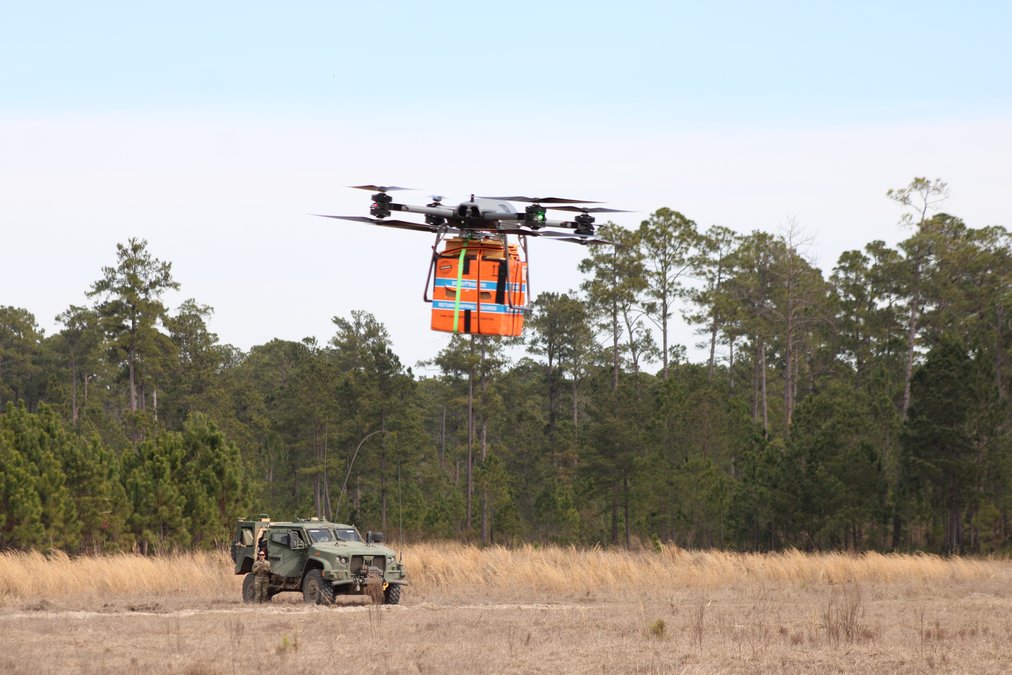
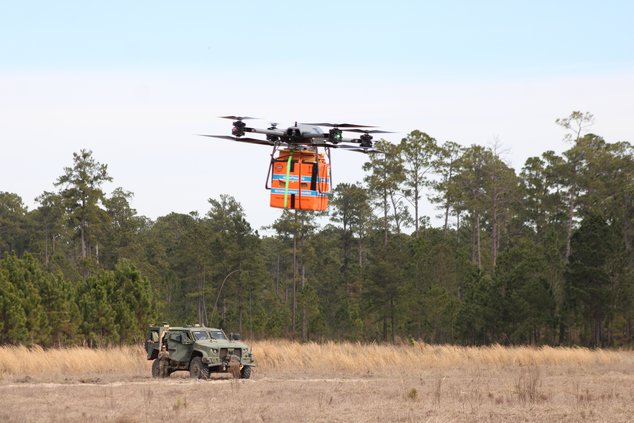
Elements of the 703rd Brigade Support Battalion tested how drones could be used to resupply troops in combat, going so far as to transport blood through the air.
“We’re testing new innovations and capabilities of how we resupply our units in future fights and conflicts,” said 1st Lt. Edgardo Rivera-Marcano, the brigade’s medical supply officer.
Soldiers used payloads of varying weights to see how the drones could handle them and how the drones reacted in flight. They also used the drones to deliver payloads in confined spaces, such as lowering the drone in a stand of trees for soldiers to receive.
“With us shifting from (the global war on terrorism) to large scale combat units, we know that distances between units are going to be greater,” 1st Lt. Rivera-Marcano said. “Having innovations such as the drone will cut the distance and having to utilize that much manpower when it comes to ground lines of communications. This will eliminate the amount of assets exposed to enemy contact while delivering supplies faster.”
Sgt. Darlene Cuadardo of the 703rd BSB’s C Company is ordinarily a medic. Saturday morning, she became a drone pilot, plugging in the coordinates of where the drone was going to deliver blood.
“I did not think that technology was going to be as available so soon,” she said. “It’s nice to have it now and be able to train with it. Usually, I’m hands on with the patients and instead of being with them throughout their entire line of care, we’ll be behind the scenes, sending them supplies.”
Sgt. Cuadardo was part of a team telling the ground control system of the Tactical Resupply Vehicle 150, an unmanned aircraft system, or done. Representatives from the Army Research Lab and the Joint Intermediate Forces Capabilities Office trained combat medic specialists how to operate the drone.
“It was interesting to have to problem solve the stability of the drone during transport and the landing,” Sgt. Cuadardo said.
The ability to send needed supplies to troops on the front lines also cuts down on the number of troops and vehicles that may get exposed to enemy fire. Some drones can lift as much as 400 pounds.
“It can revolutionize how we take care of our casualties,” Sgt. Cuardado said. “We won’t have to use as many land vehicles. It will be a more efficient time for us. It definitely saves lives.”
Putting the UAS technology into the fold also shows the 3rd Infantry Division’s flexibility as the Army undergoes its Transforming in Contact 2.0 initiative, which looks at how future conflicts will be fought.
“This is something that has never been seen, especially from an armored unit,” 1st Lt. Rivera-Marcano said. “Us having the opportunity to conduct this kind of training is awesome.”