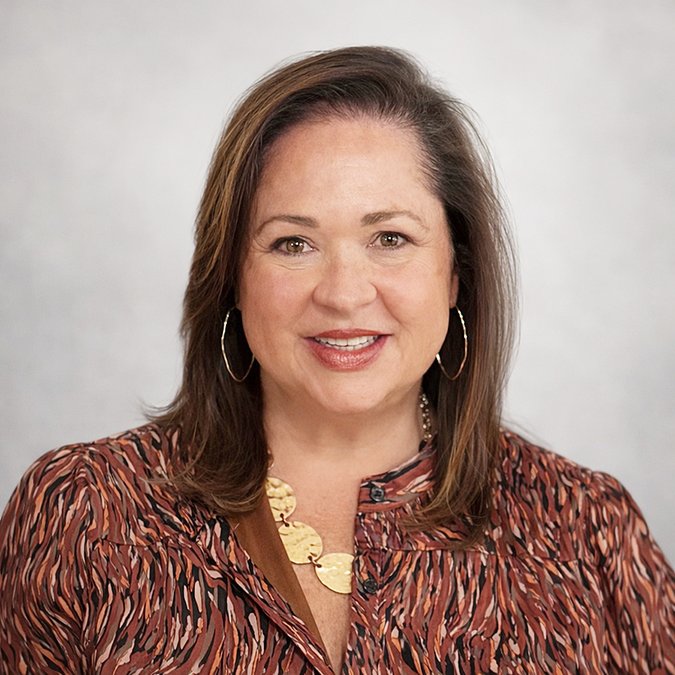
Brynn Grant
Guest columnist
I never imagined that one day I would find myself publicly defending — or explaining — a wastewater treatment plant in the community I love. And I certainly never aspired to be the face of infrastructure that most of us would rather not think about at all.
Like everyone else, I want clean water, thriving wildlife, and a future worthy of our children. So does every member of the LCDA board and staff. That is precisely why we find ourselves in the middle of this conversation.
I understand the emotion surrounding the idea of a treated water outfall in the river, especially a river you grew up fishing, swimming, and water skiing in, like I did. A place I returned to after years away, where my husband and I plan to spend the rest of our lives.
When I first learned about a wastewater treatment project that would discharge into the Laurel View River, I was already working at the Liberty County Development Authority, and it stopped me in my tracks. I wondered if I would have to leave my job! Had I found myself in a role that would require me to do something I did not think was right or good?
Over the last year, I dedicated myself to learning more. We built a qualified team of experts. We studied the reports, met with environmental scientists and regulators, worked with engineers. We have asked hard questions and listened to critics and experts alike.
I now know without a doubt that centralized wastewater treatment is one of the most fundamental building blocks of public health, environmental stewardship and economic development. It is essential if we want to attract investment, create jobs, expand the tax base, and eventually ease the financial burden on property owners. I also now understand that centralized wastewater treatment is essential to protect our coast, too, because modern, properly engineered, strictly permitted, and continuously managed and monitored wastewater infrastructure helps to prevent pollution and safeguard waterways over the long term.
Two things matter most to me: the economics and the environment.
Economically, I have watched Liberty County grow poorer over time. Liberty County’s per capita income was in the top half of the nation in 1980, but by 2023, it was at the bottom.
But opportunity is here now. Families are moving in, and with this growth comes responsibility.
The choice before us is not between “development” or “the environment.” That framing is false and unhelpful. The real choice is whether we plan responsibly for growth that is already happening. Or pretend it isn’t and face more damaging consequences.
Doing nothing is not preservation. It is neglect.
The type of centralized wastewater treatment we are proposing is called a Water Reclamation Facility because it “reclaims” water for reuse by cleaning it to a high level. The ability to reuse this reclaimed water helps to conserve the precious water in our aquifer.
Many concerned neighbors have said their fear was not that the discharged water would be dirty, but that the treated freshwater entering a saltwater system was too clean. Would the clean, treated water cause damage to the natural environment and wildlife we love?
No. EPD’s Watershed Protection Branch has confirmed that its intensive field study and environmental review concluded the impact to be insignificant given the amount of existing water flow in the river and the water quality of the treated water to be diffused there.
Approximately 258 mgd (million gallons a day) of freshwater already enters this tidal basin from ditches, creeks, canals, and runoff. Water none of us would drink, but that nonetheless feeds our tidal basin daily. It needs it.
The state’s Coastal Georgia Regional Water Plan recognizes the importance of freshwater inputs to estuaries, noting that treated freshwater discharges from municipal and industrial systems are vital to maintaining coastal ecosystems. At full future build-out, which will take 20-30 years, the proposed water reclamation facility’s maximum discharge of 3 mgd of treated water would represent 1.16% of the existing freshwater flow in the Laurel View River system. This is roughly the equivalent of adding a teaspoon to a 10-gallon bucket.
In addition, this project prioritizes reusing as much of the treated water as possible through irrigation, and potentially in cooling towers, industrial cleaning and various manufacturing processes before it ever reaches the river. While the system must maintain a maximum discharge capacity of 3 mgd, it is unlikely to approach that level of discharge.
The plant site is located 1.4 miles from the river, above the 500-year floodplain, and will be designed with resiliency and redundancy in mind. This includes generators, additional screens, and building for 150 mile per hour winds, among other things.
Modern human life on our planet is a balancing act. There are environmental impacts from turning on the lights in our homes, using air conditioning, driving cars, taking flights, and managing waste. We are improving that balance over time, but there are no absolutes. Ignoring that reality does not protect the environment. It only delays the work needed to protect it responsibly.
All I ask — with the highest respect — is that those who care about this community take the time to understand the science, the regulatory framework, and the consequences of inaction. Read beyond the headline. Ask technical questions of experts with up-to-date information. Get facts from credible sources and not social media commentators who are not accountable to anyone for the things they say and do.
We are still seeking input. We are talking calls, sitting down for one-on-one meetings and talking to community groups. We are especially interested in counsel from environmental scientists and nonprofit groups that understand the challenge and want to help ensure the healthiest ways forward.
This is not about being “for” a wastewater treatment plant. It is about being for clean water. For public health. For the responsible management of growth and opportunity. For the next generation. And for Liberty County.
Brynn Grant is the chief executive officer of the Liberty County Development Authority.