By Lucille Lannigan
Growth and Development Reporter
RICEBORO — Liberty County residents will have another opportunity to weigh in on the Liberty County Development Authority’s proposed water reclamation facility during a LCDA-hosted public information meeting July 13 in Riceboro, as officials continue evaluating whether treated wastewater should ultimately be discharged into the Laurel View River or the North Newport River.
The meeting is scheduled for 6 p.m. at the Riceboro Youth Center, located at 5649 South Coastal Highway. This meeting comes as the LCDA expands its review of potential discharge locations after significant public opposition to treated water discharge into the Laurel View River, a waterway that flows along residential areas in both Liberty and Bryan counties. The proposed water reclamation facility would be permitted to discharge up to 3 million gallons per day of highly treated wastewater; although, officials said the actual discharge amount would be much lower.
Those opposed to discharging in the Laurel View River pointed to the North Newport River in Riceboro because of the river’s history with surrounding industrial discharge.
The North Newport River is a 26-mile long tidal river that flows through Riceboro and connects to the Medway River and Atlantic Ocean via St. Catherine’s Sound. The LCDA has since submitted a wasteload allocation request to the state Environmental Protection Division for the North Newport River, a regulatory step that will determine whether the river can even be considered as a potential outfall location.
This review is expected to take six to nine months.
“Citizen input remains an important part of this process as we continue evaluating all viable options,” LCDA Board Chairman and state Rep. Al Williams said. “We encourage residents to attend, ask questions, and learn more about the work being done to identify the most responsible long-term solution for Liberty County.”
Since reviving the nearly 20-year-old water reclamation facility project, the LCDA has committed to initiatives to promote environmental stewardship along the county’s waterways.
One initiative includes a landmark agreement between the LCDA and the Ogeechee Riverkeeper (ORK), announced Tuesday, which will establish a water quality monitoring program on the Laurel View and North Newport rivers.
Officials said the yearlong monitoring effort will create a publicly available baseline dataset to help guide future decisions and provide residents with transparent information about existing river conditions before any wastewater facility begins operation.
LCDA CEO Brynn Grant called the partnership an important step in ensuring future decisions are based on credible scientific data. “This partnership reflects a shared commitment to transparency, sound science, and informed decision-making,” she said.
Using remote-enabled probes, the monitoring program includes continuous water-quality measurements and laboratory testing of samples collected from the Laurel View and North Newport rivers, according to a press release. ORK’s testing will track dissolved oxygen, temperature, and salinity through continuous monitoring, as well as five-day BOD, enterococci, ammonia, total phosphorus, orthophosphate, pH, and total kjeldahl nitrogen (TKN), through monthly sampling.
Periodic reports will be produced during the project and be made available to the public to help residents better understand the health of local waterways.
“Ogeechee Riverkeeper has and always will push for science-based decision making,” Damon Mullis, executive director of ORK, said. “We will also continue to advocate treatment at the highest possible level for the waste created and push for the most stringent permit conditions we can get to protect our waters as growth continues.
Before samplings begin, the Riverkeeper will develop a monitoring plan with engineering firm Thomas & Hutton to identify where samples will be collected, how often and how they’ll be handled as well as the quality standards to be followed.
All data will be publicly available at https://www. ogeecheeriverkeeper.org/ libertywater/. ORK’s dedicated webpage will also include collection protocols, quality control measures, and methodology.
Grant said when initial planning for the water reclamation facility project began, the North Newport was not viewed as a viable option because of existing industrial discharges into the river. Instead, planning focused on the Laurel View River, where the authority received a renewed wasteload allocation earlier this year.
However, Grant said conversations with residents, environmental organizations and local officials over the past several months prompted the authority to revisit the North Newport River. International Paper, a paper mill located in Riceboro, had long been discharging treated industrial wastewater into the North Newport River. The paper mill closed its doors in September 2025, but the facility still holds a permit to discharge into the river.
“Things have changed … and are in transition there,” Grant said. “Maybe now it’s an option when we didn’t think it was one.”
Chris Stovall, a project engineer with Thomas & Hutton, said treated wastewater from the proposed reclamation facility would receive treatment to a higher standard than traditional secondary industrial treatment.
If the EPD determines that the North Newport is a viable option, engineers would then conduct more detailed evaluations, including environmental permitting, water quality studies and route analysis before any recommendation is made to the LCDA board.
Stovall said additional studies would also examine wetlands, cultural resources and pipeline routing.
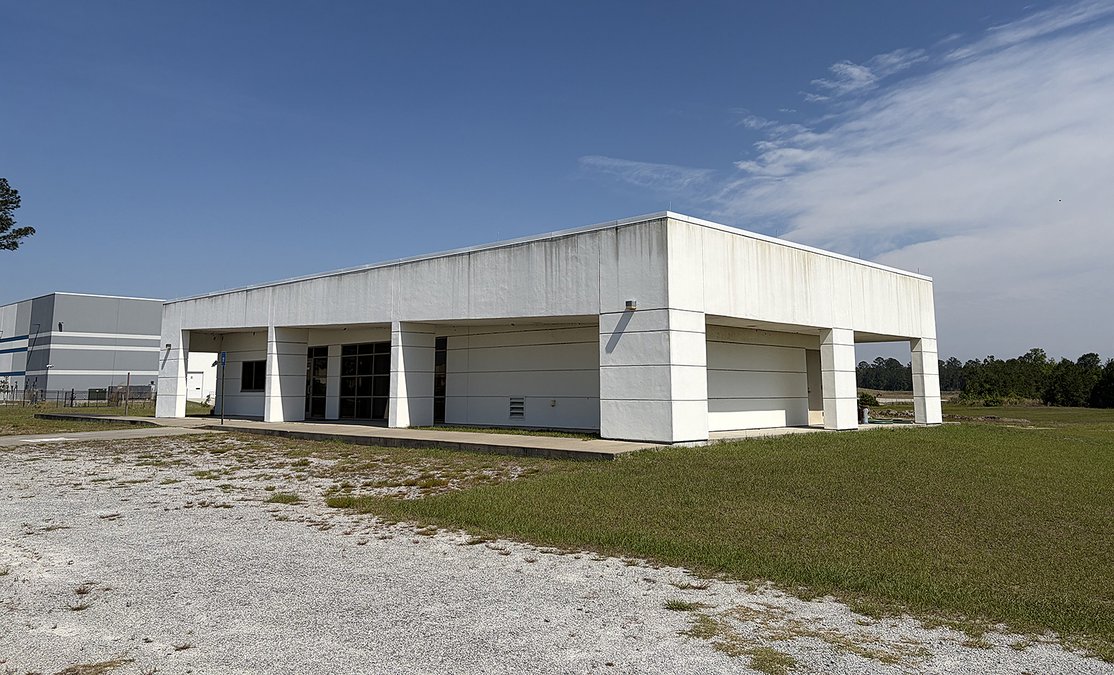
Grant said the proposed treatment plant itself would remain at the planned Tradeport East location, regardless of which river is ultimately selected. Grant said the site has been acquired, lies outside the 500-year floodplain and originally was designed to accommodate a wastewater treatment facility.
She added that pipeline distances to either discharge location are nearly identical.
Riceboro Mayor Chris Stacy wrote in a statement that the city recognizes Liberty County’s need for additional wastewater infrastructure as growth continues but wants residents to fully understand the environmental science behind any future decision.
“If Riceboro is expected to be part of a regional wastewater solution, then Riceboro should also be part of the regional conversation,” Stacy wrote. “As we look toward the future … we are updating our Master Plan because we believe in preparing for the future rather than reacting to it. Therefore, my hope is that this discussion is not simply about where treated water is discharged. My hope is that this discussion becomes part of a larger conversation about regional cooperation, infrastructure investment, environmental stewardship, and economic opportunity for all of Liberty County.”
The July 13 meeting will include an overview of the proposed project, updates on engineering and environmental reviews, discussion of the alternatives currently under consideration and an opportunity for residents to ask questions of project representatives.
Officials said public feedback will continue to play a role as Liberty County evaluates what it describes as a long-term wastewater solution designed to support future growth while protecting the county’s rivers and natural resources.