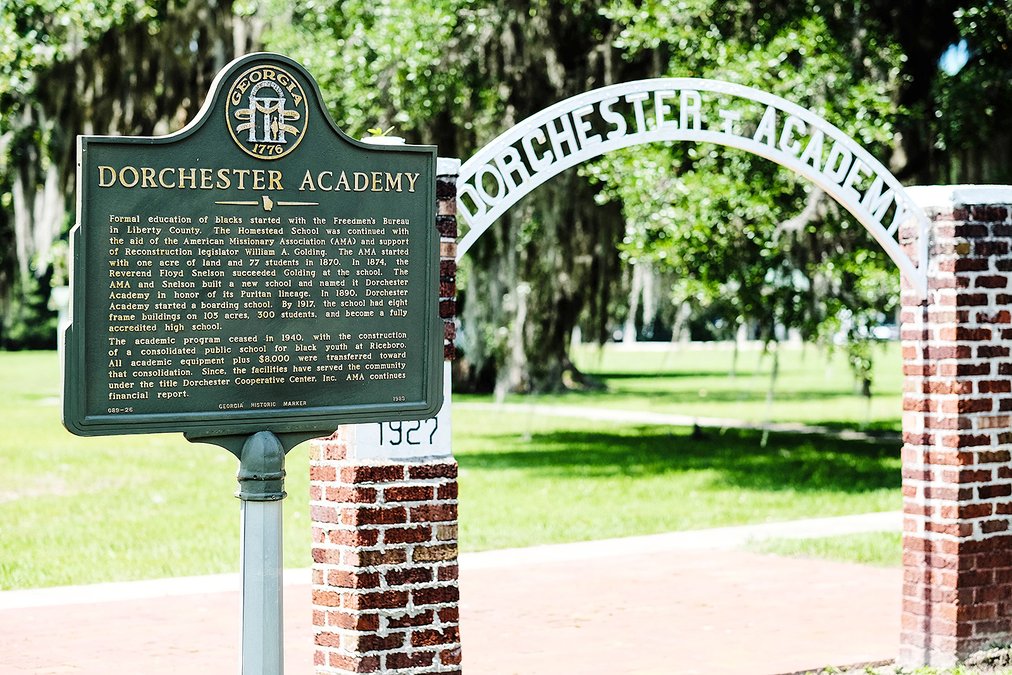
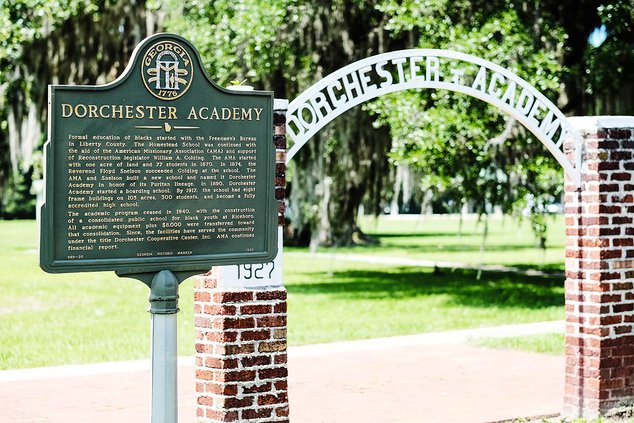
As one of only 11 stops in Georgia on the U.S. Civil Rights Trail, Dorchester Academy is known for the vital role it played in the lives of young people throughout our community many years ago. Getting an education was a long and tough process for children in large rural areas, but they continued to show up each day ready to learn things that they would pass down for generations to come. Keep reading to learn more about this historic site!
Walkin’ to Dorchester Academy
The education program began in 1866, although the brick-and-mortar school wasn’t built until 1872. The building was funded by the American Missionary Association and allowed for the school to add a much wider range of subjects to their programming. Once the school was built, eager and dedicated students would wake up before the sun to make their daily commute to Dorchester Academy. From the time the schooling program started, children would walk up to 12 miles one way to learn how to read, write and solve equations.
How would the students know when to start their walk? The bell at the Midway Congressional Church would ring periodically to keep track of time. It acted as a clock for many each morning, afternoon and evening because the echo could be heard from 7-10 miles away.
It became a fully accredited high school by the year 1917 and had an enrollment of over 300 students! At this point in time, many schools only offered education programs up to 11th grade, but this pioneering school was the exception. It was the first school in Georgia to graduate a 12th grade class! The students who got their education here worked very hard, and the entire senior class of 1934 was able to attend college.
The legacy lives on
The academic learning program ended at Dorchester Academy in 1940, but the trailblazing spirit lived on! The building that housed the school became the Dorchester Cooperative Center. It played a vital role in the lives of the African American community throughout the county.
The center was home of the Liberty County Citizen’s Council which was founded in 1946. This council was created to assist, register and organize African American voters. Many years ago, when African Americans would show up to vote, they would be required to guess the number of jelly beans that were in a jar. If their guess was wrong, they were not allowed to cast their ballot. When visiting the site, make note of the jars of jelly beans displayed throughout.
They are used as a symbol of progress and change.
Speaking of change, many key figures of the U.S. Civil Rights Movement spent time at Dorchester Academy to get away from the chaos, organize and plan. Among these key figures was Dr. Martin Luther King Jr..
He had his own room at the school and spent lots of time with the students. He even prepared for “Project C” in Liberty County, which would later be memorialized as the Birmingham March.
If you plan on visiting the site today, you can see Dr. King’s former bedroom and work space where he and Dr. Ralph Abernathy, Andrew Young and Dr. Fred Shuttlesworth made many crucial decisions.
An incredible walk in Liberty County you will never forget
Stand where they stood and walk the path paved by students who created a new way of life. Every June the Dorchester Improvement Association hosts the annual Walk to Dorchester. This event celebrates the impact made by the school and honors the people who worked tirelessly to make it the amazing place that it once was. Attendees walk the same walk that the former students made each day and get a better understanding of what it took for them to get an education.
Look back on the past while moving forward at the 24th Annual Walk to Dorchester on Saturday, June 15, 2024. For more information about the event, contact Dorchester Academy by calling 912.442.0018 from 8 a.m.5 p.m. Monday through Friday. It is a memorable way to #ExploreLiberty and learn about the legacy of those who walked before you!