By Kelsie Steber, Fort Stewart Public Affairs Office
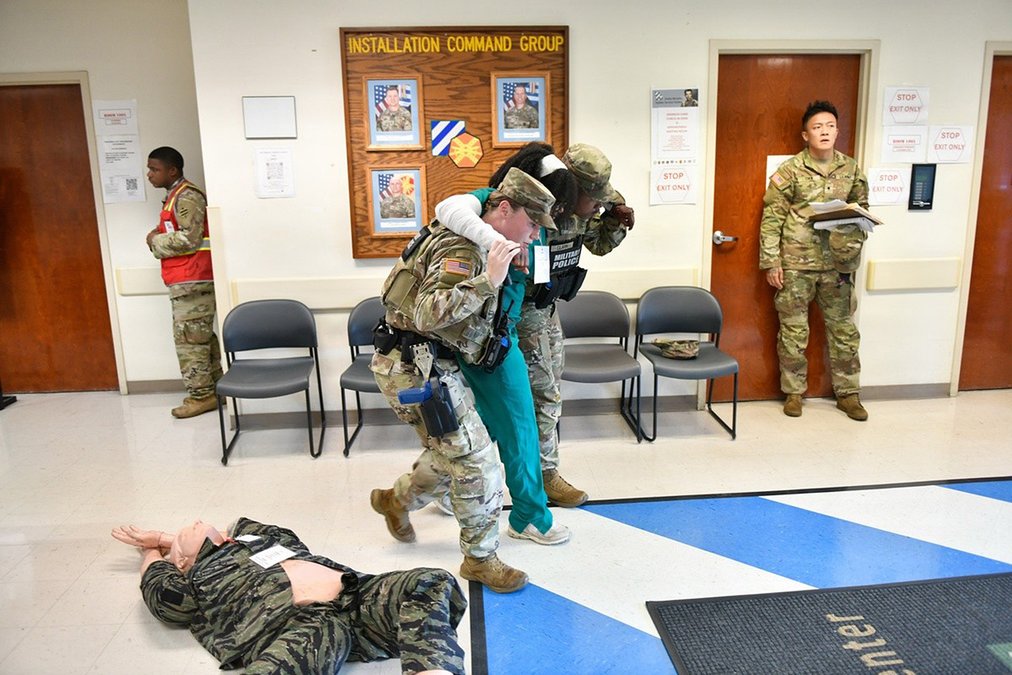
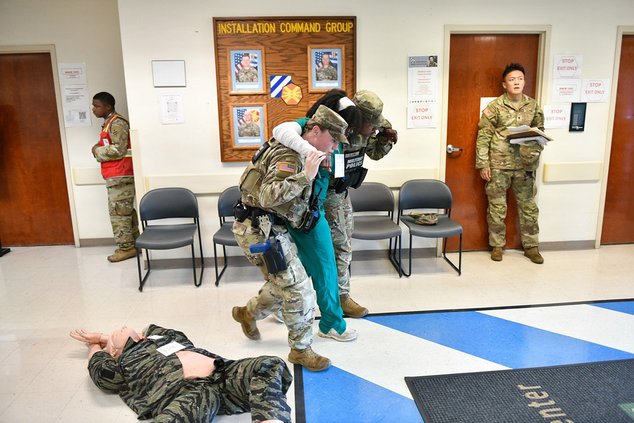
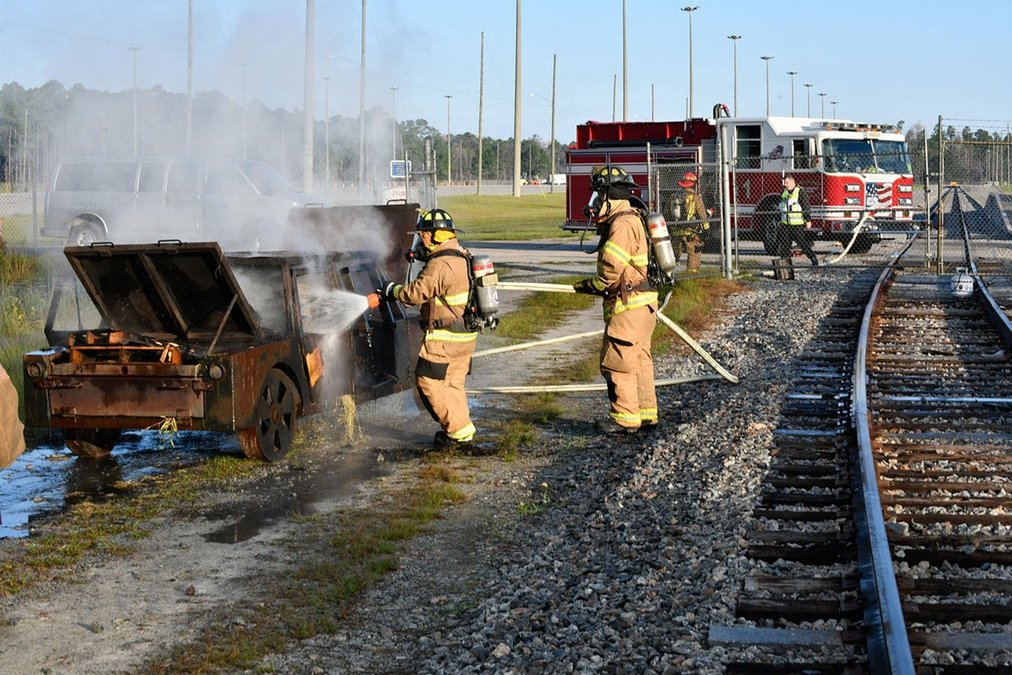
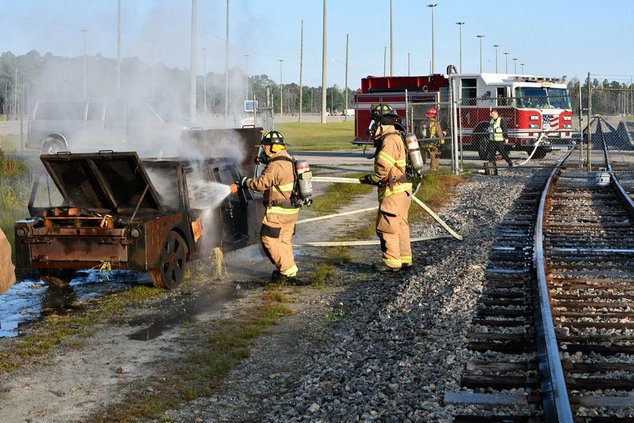
In the Army, the phrase “train as you fight” not only applies to soldiers but to those who protect the installations. Several agencies across Fort Stewart- Hunter Army Airfield completed their Integrated Protection Exercise on Wednesday, Oct. 14.
“Integrated Protection Exercises give us the opportunity to do exactly that — measure our readiness, highlight best practices, and pinpoint areas needing improvement,” said Jeff Bergeron, Directorate of Plans, Training, Mobilization and Security emergency contingency operations officer. “These exercises help ensure the garrison can respond effectively during real-world contingencies.”
Exercises of this size and depth take up to six months to plan.
“Throughout that process, we closely coordinate with all first responders to understand their specific training objectives and what they want to test or validate,” Bergeron said. “We then tailor the scenario to meet each directorate’s goals.”
For Beau Bradley, DPTMS installation emergency manager, “this exercise was quite possibly one of, if not, the most complex, I’ve dealt with in my time.”
Bergeron said this exercise included the right level of rigor, detail and coordination which forced partners to work as a team.
“After each incident, small huddles formed where agencies shared insights and lessons learned — those moments are invaluable,” he said. “They’re the reason we design and execute these exercises: to strengthen our ability to respond as one cohesive organization.”
These trainings are constantly changing and involve different partners. For instance, Liberty Regional Medical Center used this exercise to train their staff on patient transport, and for the garrison team, this was the first big event working out of the relocated emergency operations center.
“This exercise exposed equipment gaps that require immediate attention along with certain other specific items we need to refine,” Bradley said.
Real-world experiences from the past two years are influencing their takeaways to ensure previous mistakes are not repeated.
“We also recognized that sustained communication — across all directorates and with outside partners — is essential,” Bergeron said. “In emergency management, we often say, ‘Make a friend before you need a friend.’ Strong relationships built ahead of time are critical to an effective disaster response.”
Bergeron and Bradley rate success for these events by achieving their training objectives, which are the three Mission Essential Tasks: contain the incident, shorten the during, and speed to recovery. This measurement of effectiveness applies to any disaster whether natural or man-made.
Now the garrison turns its focus toward the externally evaluated full-scale exercise which will take place in March 2027.