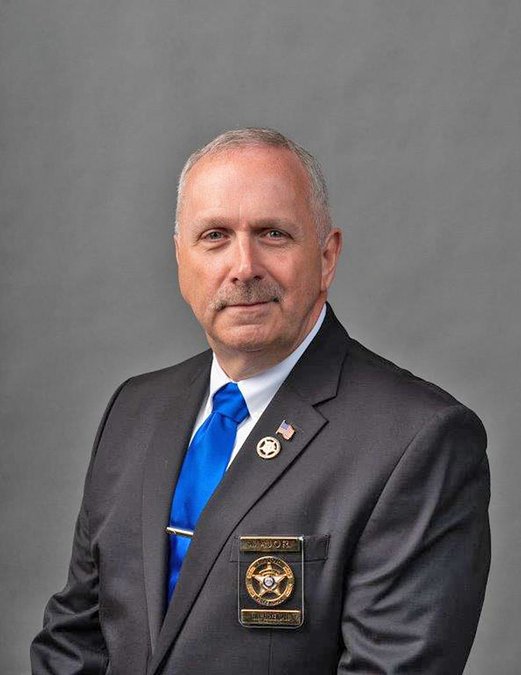
There is a lot Flock cameras can do for law enforcement, Liberty County Sheriff ’s Office Maj. Bill Kirkendall said.
There is also a lot the cameras — thrust into the spotlight as incidences of misuse by law enforcement officers become known — can’t and don’t do, he said.
What the Flock cameras won’t do, Maj. Kirkendall said, is write someone a ticket or a citation for a traffic violation. Neither can they show who is driving, who else might be in the car or who the registered owner is.
“As with any new technology, it’s been blown out of proportions as far the capability of the platform and its limitations,” he said. “All it shows us is that at a particular time and location, that vehicle was observed.”
While patrol cars are equipped with license plate readers that can reveal such information as a driver with a suspended license or a vehicle that does not have current insurance, that’s not possible on the Flock system, Maj. Kirkendall said.
“We don’t have them set up monitoring stop signs. That’s not part of the program,” he said.
The LCSO has 11 Flock cameras in the unincorporated parts of the county, and six within city limits. The use of the cameras — what information they record and who logs in to look at the information — is audited every month. The information the cameras record, Maj. Kirkendall said, is purged every 30 days. Kirkendall is the head of the LCSO’s Bureau of Professional Standards, and each deputy is handed a guideline on how to use the Flock system properly.
“Our folks are trained in how to use these systems,” he said. “They know there is an audit trail. Every time they log in, there is an audit trail. We can pick up pretty easily whether there is any abuse in the system. If something is flagged, we have the immediate ability to suspend that user.”
Since the sheriff’s office put Flock cameras into use, there have not been any reports of the cameras’ data being used for anything other than legitimate law enforcement purposes, Maj. Kirkendall said.
“So far, we’ve received a clean bill of health,” he added.
Deputies are trained on how to use the system and when it is appropriate to request Flock footage.
“We encourage them to use the system,” Kirkendall said. “But they also understand, they have the policy. They understand the repercussions of doing it the wrong way. You will be held to answer for it if you step outside the boundaries.”
The Flock system also will flag cases where the system believes it may be getting misused. It flagged a deputy who was running a vehicle tag almost 40 times a day. But the deputy also is attached to a Drug Enforcement Administration task force and the deputy was tracking a car and its whereabouts.
The Flock cameras have been useful for law enforcement, helping track down stolen items and even helping them locate missing people. It’s also helped solve hit-and-runs.
For instance, if a victim of a hit-and-run tells law enforcement it was a red car that hit them before it sped off, “we can go to the cameras and search by red car at that certain date and time and we can see the red cars in the area and run the plates and eliminate suspects,” Kirkendall said.
If a home is burglarized, and a homeowner’s doorbell camera catches a glimpse of a getaway vehicle, law enforcement can take that and search Flock’s data for a matching vehicle.
The Flock cameras were responsible for locating a Conex trailer full of property stolen from construction sites in Liberty and Long counties, Maj. Kirkendall said.
“The cameras captured that trailer going down the road and it was abandoned in Chatham,” he said. “That is a true success story.”
Flock data also was used to locate a missing woman, though the outcome was tragic. One of the Flock cameras hit on the vehicle’s license plate, and it was found in Liberty County, with the missing person found deceased next to it.
While Flock can read a license plate number, it is still up to law enforcement personnel to run that number through the Georgia Crime Information Center for any potential action.
“It’s not out there spying on anybody,” Maj. Kirkendall said. “They’re there as a passive observer. Yes, it’s capturing a license plate. But it doesn’t tell us if you’re the registered owner of that car. It tells us this vehicle was at this location at this date and time. If it’s something we need to follow up on, then we have to take the license plate and run it through the GCIC. It’s one piece of an investigative tool is what it is.”
The Flock cameras also aren’t listening in on people’s cell phone conversations — another allegation about the system Maj. Kirkendall has heard.
“They think Flock cameras are writing speeding tickets,” he said. “They are looking for people running red lights. They’re looking for people talking on their cell phones. That is the furthest thing from the truth.”
The Flock system can conduct a number of alerts, such as those for missing people, stolen vehicles, protection orders, sex offender, gang and terror watch list and Amber alerts. But the sheriff’s office also is stringent on what information can be entered into the system — detectives can request a license plate of a vehicle of interest is entered into the Flock database, but only with the approval of a supervisor from either the criminal investigation division or narcotics.
But reports of Flock misuse are getting public attention. The GBI recently arrested four Savannah Police Department officers after they were accused of misuse of a license plate reader system and arrested a former 911 director in Paulding County for misusing a license plate reader system earlier this month. Last month, the GBI arrested and charged a former deputy — and current investigator for the Ogeechee Judicial Circuit — with misusing a license plate reader system.
“It’s just like with any other physical platform — there is room for abuse,” Kirkendall said. “It’s important for us as managers to take a look at this and we audit every 30 days. We look at anything suspicious. Flock sends us questionable queries. If they suspect it may be out of the norm, we can do our own inquiry.”
Kirkendall said a person’s smart phone will keep track of them more than a Flock camera will.
“There is a lot less going on with Flock cameras than going on with the cell phone on your hip,” he said. “This is one tool for law enforcement to help solve crimes and protect citizens. It’s not evil. It is not taking away civil liberties.”