By Lucille Lannigan, Regional Growth and Development Reporter
As the Liberty County Development Authority prepares its budget for fiscal year 27, board members talk of shifting focus toward a broader strategy centered on strategic business attraction, workforce development and regional collaboration.
During the authority’s May board meeting Monday, LCDA leaders reviewed current financials while outlining how next year’s spending priorities, particularly in business attraction and retention, connect to larger conversations about commercial growth, housing, infrastructure and land use planning.
As of April 30, the authority reported it was roughly 83% through its current budget cycle, with the LCDA general fund tracking at 98.5% of budgeted revenue. The LCDA added $788,000 to reserves during FY26, leaving LCDA with roughly one year of operating expenses and seven months of debt service in reserve funds.
There was discussion on how money in reserves could be used for upcoming infrastructure costs, including its share of improvements tied to MidCoast Regional Airport. LCDA Board Chairman Al Williams said the airport remains in strong condition and continues expanding, though he said some future federal funding remains uncertain, especially with the continuing conflict in Iran.
“On the 1st of June we’ll be in Washington,” Williams said. “We don’t know what might happen, but there are some projects that are very important to us. We’ll know more hopefully after we meet with the Pentagon. That’s about all we can say about the pending governmental funding.”
The larger focus of the meeting was how the proposed FY27 budget positions the county for future economic growth. Draft budget projections show LCDA expects just over $6 million in revenue for FY27. LCDA board members discussed increased activities related to business attraction and retention.
LCDA CEO Brynn Grant talked about budgeting for retail strategies in its strategic plan for commercial development.
“So for example, we might ask and will ask that they have no other clients in our county except us for as long as they are working with us,” Grant said. “We will engage with local partners potentially to maybe advance that plan on behalf of all of us. But we’re just beginning those conversations.”
Liberty Consolidated Planning Commission Executive Director Jeff Ricketson said these strategies had been successful in the county before.
“All I know is that when that was finished, there was an explosion of commercial development in this town over that subsequent decade,” Ricketson said.
Part of the LCDA’s business attraction and retention budget was allocated to a Liberty County workforce study conducted by the Regional Industry Support Enterprise or RISE Savannah, a workforce development and industry support organization.
Anna Chafin, RISE’s CEO, gave the board an update on the organization’s 2025 progress.
Chafin said the organization is currently updating its regional workforce study to evaluate whether projected labor shortages have improved since 2023. When RISE was first formed, a labor and workforce study showed that the region it serves would be in a deficit of 1,500 workers to fill job demand if it didn’t implement workforce strategies.
“We’re doing a check-in on where we’re at with those deficits,” Chafin said. “Hopefully what we’ve been able to do in these 2 1/2 years is help mitigate those deficits that were projected.”
She said the updated study will be available in the next couple of months.
Board members also connected business attraction and retention concerns to future land use planning discussions.
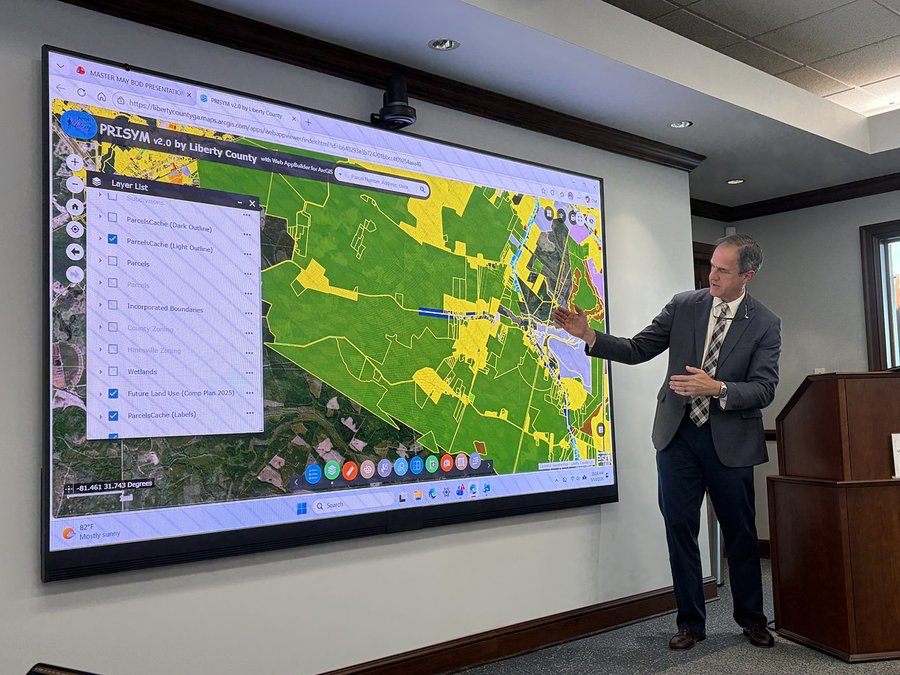
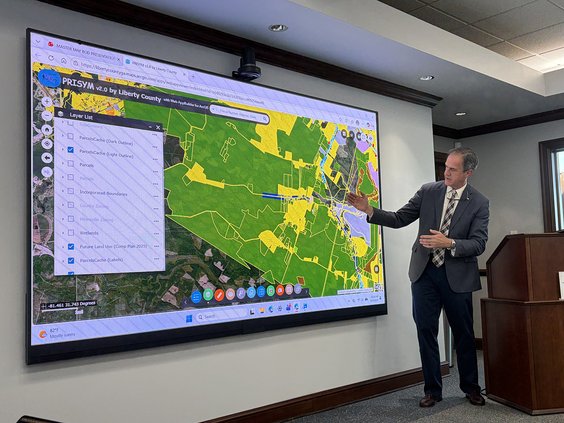
Ricketson presented Liberty County’s future land use maps to board members who debated whether some mixed-use corridor designations along major highways could unintentionally limit future industrial opportunities.
Marcus Sack, LCDA board member, urged the board to look at maps and pay attention to areas specifically zoned for mixed-use.
“Note that according to our comprehensive plan, no industrial use can happen in those areas at all,” he said. “Some of those areas are at least transitional areas we’ve had conversations about.
However, Ricketson said this zoning was intentional to account for potential residential development, certain commercial businesses, etc.
“It allows the flexibility to consider some non-residential uses, but you don’t want to just give them a blanket,” he said. “You don’t want to rezone all that property because then you might have some things that you don’t want when your major gateway is coming into the community.”
The board also tied budget discussions to a recent Georgia Tech study presented to the LCDA at the beginning of May on Liberty County’s tax structure and long-term development challenges.
The study found Liberty County homeowners carry a relatively high property tax burden compared to surrounding communities, driven in part by lower median household incomes, lower home values and a large number of disabled veteran tax exemptions.
Researchers concluded the county needs additional commercial and industrial development to help diversify the tax base and reduce pressure on residential taxpayers.
For every dollar generated in residential property taxes, county services cost approximately $1.20, according to the study. Commercial properties, meanwhile, cost only about 58 cents in services for every tax dollar generated.
LCDA Board member and Liberty County Commission Chairman Donald Lovette said the study reinforced the need for a coordinated economic development strategy.
“It (the study) pretty much laid it out for us,” Lovette said. “I really think that needs to be a county-supported effort that we work to attract the commercial and industry.”
Grant said the authority plans to continue sharing the study publicly while using it to shape future policy planning discussions.
“You can’t have workforce without housing. You can’t have housing without workforce. You can’t have businesses without workforce - the commercial and industrial interests are important to lowering the burden on all other property owners,” she said.
The LCDA will propose its final budget for FY2027 in June.